
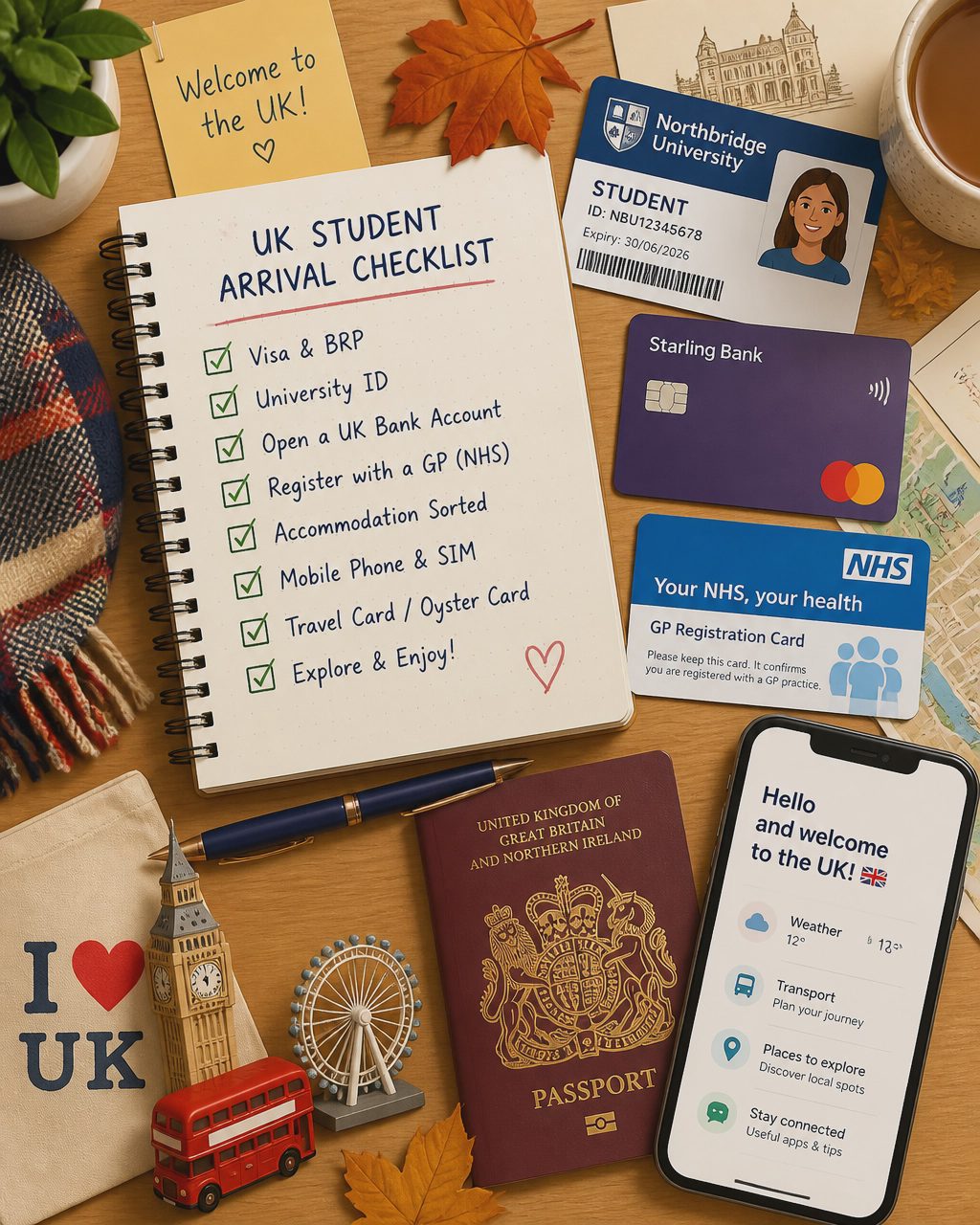
First Week in the UK: A September Arrival Checklist for Turks and Caicos Students
The first week in the UK can feel exciting, unfamiliar and overwhelming. A student may be adapting to a new climate, new transport system, different academic expectations and life away from family in the Turks and Caicos Islands.
Good preparation reduces anxiety. It also gives students the confidence to settle quickly, build a support network and focus on their education.
This September arrival checklist covers the most important practical tasks for TCI students travelling to the UK for school, college or university.
Important: Immigration, guardianship and university fee rules can change. Always confirm your personal requirements with your school, university and the relevant UK government service.
Before you fly from Turks and Caicos
A calm first week begins before departure. Keep important documents in your hand luggage rather than placing them in checked baggage.
1. Check passports, nationality and immigration status
Confirm which travel document your child will use:
- A British Overseas Territories Citizen (BOTC) passport
- A British Citizen passport
- Both a BOTC and British Citizen passport
- Another passport with UK immigration permission
A BOTC passport does not automatically answer every question about a student’s right to study in the UK, immigration status or university fee classification. If your child needs permission to study, check that their visa has been granted and that their eVisa is correctly linked to the passport they will use for travel.
The GOV.UK guidance for people coming to the UK from Turks and Caicos explains that TCI citizens may need a visa to study, work or visit the UK. You can also use the official UK visa checker.
Save the following in a secure online folder:
- Passport details
- Visa decision letter
- eVisa information and UKVI account details
- Share code instructions, if relevant
- CAS or offer letter
- Course start date
Do not rely only on a screenshot on a phone. Carry printed copies as well.
2. Confirm accommodation and arrival arrangements
Before the flight, make sure the student knows exactly where they are going.
Save:
- The full UK address
- Accommodation provider’s telephone number
- Move-in date and time
- Check-in instructions
- Emergency contact details
- Transport arrangements from the airport
This is particularly important when renting in the UK as an international student. Many landlords and accommodation providers ask for a UK-based guarantor or additional financial evidence.
If the student is under 18, confirm that the accommodation accepts students of their age and that its safeguarding arrangements are clear. Check rules about curfews, overnight stays, visitors and emergency support.
3. Arrange guardianship and guarantor support
For an under-18 student, guardianship is a serious welfare responsibility. Some schools and accommodation providers require a UK-based guardian, and visa or school arrangements may also set specific expectations. Confirm the exact requirement directly with the institution before travel.
A professional guardian service should provide:
- A clear Letter of Undertaking, where required
- Emergency contact details
- A process for responding to illness or urgent concerns
- Communication with the school or college
- Welfare check-ins
- Support during travel disruption or accommodation problems
- A clear escalation process for parents
A guardian should be more than a name on a form. The right support gives a young person a trusted adult to contact when they feel confused, lonely or uncertain.
You can read our guide on choosing a UK student guardian before making arrangements.
4. Prepare a document folder
Create one printed folder and one secure digital folder containing:
- Passport and visa or eVisa information
- CAS or offer letter
- Accommodation contract
- Guardian details
- Guarantor information
- Travel insurance documents
- Bank or sponsorship evidence
- Copies of academic certificates
- Emergency contacts
- Prescription information, if applicable
If your child takes medication, keep it in its original packaging and carry the prescription or a doctor’s letter. Keep the most important documents accessible during the journey.
5. Arrange communication and travel essentials
A UK SIM card or eSIM helps your child contact family as soon as they land. It also makes it easier to reach the guardian, accommodation provider, university and emergency services.
Pack a small arrival kit containing:
- A phone charger and UK adapter
- Any essential medication
- A warm layer and waterproof jacket
- Basic toiletries
- A small amount of British currency
- Travel details and the UK address
September weather can be cooler and wetter than in Turks and Caicos. A few practical items can make the first days more comfortable.

The first 48 hours in the UK
The first priority is safety and communication. Once your child has arrived:
- Contact parents to confirm they have landed.
- Contact the guardian or responsible adult.
- Check in at the accommodation.
- Save the route to campus or school.
- Share the student’s UK address with family and the institution.
- Confirm the next day’s enrolment or induction arrangements.
If the student has difficulty at the airport, misses a connection or cannot access their accommodation, they should contact their guardian immediately. They should not feel they have to solve a serious problem alone.
First-week checklist for students
1. Complete enrolment and collect student ID
Attend enrolment or registration as soon as it opens. The institution may ask for:
- Passport
- Visa or eVisa evidence
- CAS or offer letter
- Academic certificates
- Evidence of fee payment or sponsorship
- Passport photographs, if required
Student ID may be needed to access the library, buildings, student discounts and other services. Ask where to find the international student office and student wellbeing team.
2. Complete right-to-study checks
The university or college must confirm that the student has permission to study. Complete these checks promptly and provide any requested documents.
If the student has an eVisa, make sure their UKVI account is active and linked to the correct travel document. The official Student visa guidance explains how to access an eVisa and check the conditions attached to the visa.
Do not ignore an email from the university asking for immigration documents. A delay can affect enrolment or access to university systems.
3. Register with a local GP
A GP is a local NHS doctor. Students should identify and register with a GP near their accommodation as soon as possible. They do not need to wait until they are ill.
Use the NHS service to find a GP surgery. In England, registration is free, and the NHS states that students do not need ID, proof of address or proof of immigration status to register. A university or accommodation address can still be useful when completing the form.
Also find out where to go for:
- Urgent medical help
- Out-of-hours care
- Mental health support
- Dental care
- Prescriptions
Knowing where to get help before a problem arises supports both emotional and physical wellbeing.
4. Open a UK bank account
A UK bank account can make rent, food, transport and regular payments easier to manage. Requirements vary, but a bank may ask for:
- Passport
- Proof of immigration status, where relevant
- UK address
- University confirmation letter
- Student ID or enrolment evidence
Ask the university for a bank letter early. Some banks may accept a tenancy agreement or halls-of-residence letter as proof of address.
When the account is open:
- Set up online banking
- Protect passwords and security codes
- Arrange rent or accommodation payments
- Keep enough money available for transport and food
- Never share banking details with unfamiliar people
5. Check the room and report problems
Students should inspect their room as soon as they move in. Complete the inventory carefully and photograph any existing damage.
Report:
- Broken furniture
- Stains or marks
- Missing items
- Faulty heating or appliances
- Damp or mould
- Security concerns
Keep a copy of every report. Early documentation protects the student and helps the accommodation provider resolve issues quickly.
6. Attend orientation and welcome events
Orientation is not only about finding lecture rooms. It is an opportunity to learn how the institution works and meet people.
Encourage your child to attend:
- Course induction
- International student events
- Freshers’ activities
- Student union sessions
- Clubs and societies
- Academic skills workshops
- Wellbeing and counselling introductions
The first friendships may begin at an event that feels uncomfortable to attend alone. A student does not need to join everything. One welcoming activity can be enough to start building a community.

Ask about home fee status before paying international fees
BOTC students should ask the university to assess their fee status. Holding BOTC status does not automatically guarantee home fee classification.
The assessment may consider:
- Nationality and immigration status
- Whether the student also holds British citizenship
- Right of abode or settled status
- Where the student has ordinarily lived
- The three years before the course begins
- Whether residence was mainly for education
- The specific course and institution
Contact the university’s admissions or fees team and request a formal assessment in writing. Provide relevant evidence, such as:
- BOTC or British Citizen passport
- Immigration documents
- School letters
- Evidence of residence
- Details of the student’s family circumstances
Our guide to UK student finance and home fee status for TCI students explains why early clarification matters. Do not assume that a student will be treated as an international student, but do not assume they will qualify for home fees either.
A note for parents in Turks and Caicos
Homesickness is normal. A student may appear confident while still feeling lonely, anxious or uncertain. They may need time to adjust to the pace of UK education, independent living and cultural differences.
Helpful parent support includes:
- Agreeing regular call times
- Asking open questions rather than only asking about grades
- Encouraging sleep, food and healthy routines
- Allowing the student to solve small problems independently
- Staying connected to the guardian and institution
- Taking changes in mood or behaviour seriously
The goal is not to remove every challenge. It is to ensure the student has trusted support while developing confidence and independence.

How Guilaine Brutus Consultancy can help
At Guilaine Brutus Consultancy, we connect TCI families with practical, culturally grounded support for the UK transition.
Our services can include:
- Student guardianship and welfare check-ins
- Safe housing and accommodation guidance
- Guarantor support and referrals
- Education pathway planning
- Migration and identity guidance
- Communication with parents abroad
- Regular academic and emotional progress reports
We understand that studying in the UK is more than an academic decision. It is a significant mobility and identity journey for the whole family. Our holistic approach helps young people navigate UK life while maintaining their cultural pride.
A successful September arrival should give students more than a place to live. It should give them safety, belonging and the confidence to thrive.
Planning a September start? Visit Guilaine Brutus Consultancy or message us on WhatsApp at +44 7512 117679.
This article provides general information, not legal or immigration advice. Confirm visa, fee-status, guardianship and accommodation requirements with the relevant institution and official authorities.